
Death and illness in Australia and the importance of insurance
Leading causes of death and illness in Australia
ClearView has compiled an summary table of the leading causes of death in Australia, along with the prevalence of these diseases in the community.
This information highlights the importance of considering these probabilities when it comes to insurance, especially if lifestyle choices and hereditary or genetic factors increase one’s risk.
Prevalent illnesses beyond the top causes of death
While the leading causes of death in Australia include cardiovascular disease, cancer, dementia, respiratory diseases, diabetes, and liver disease, there are other prevalent illnesses that significantly impact the population but may not always be reflected in mortality statistics.
The importance of insurance
Insurance is a vital part of financial planning, providing a safety net against unexpected financial burdens. It ensures that individuals and families are protected from significant expenses and can maintain financial stability.
Population and Health Statistics in Australia
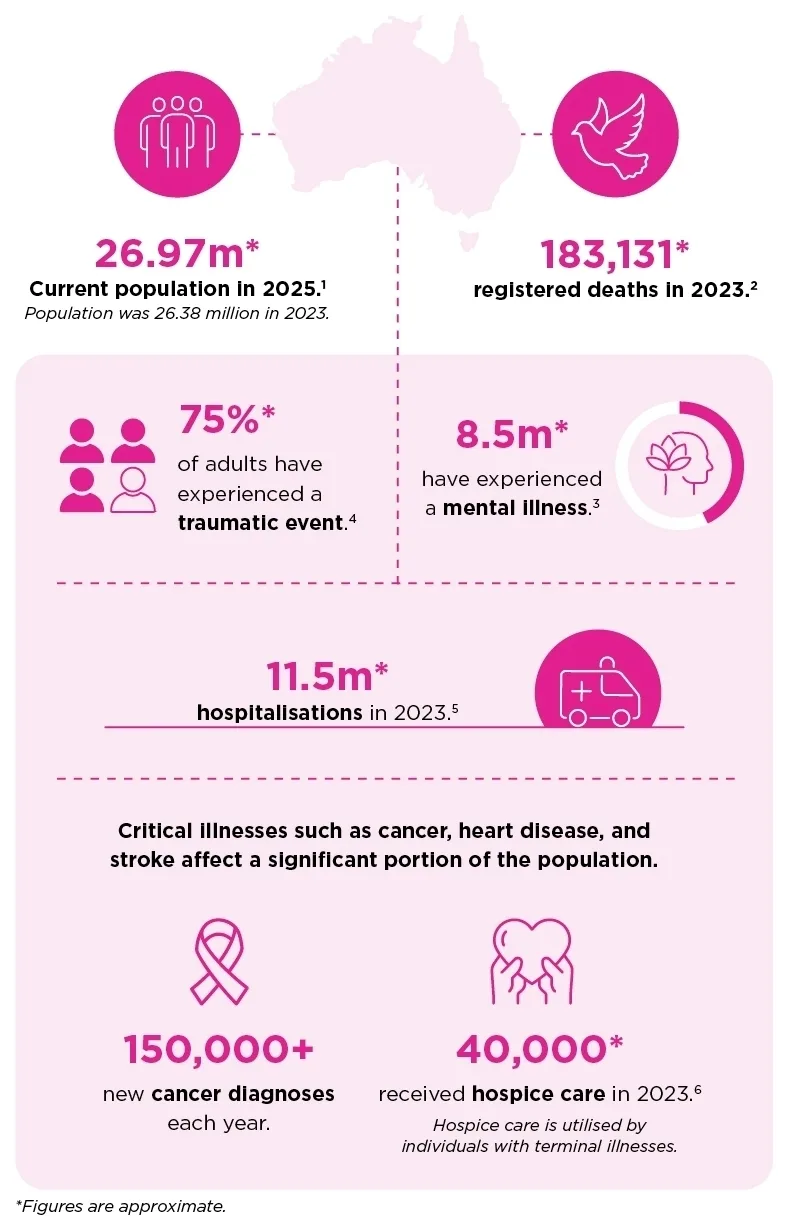
There is a high prevalence of health conditions in the Australian population. Life insurance provides a safety net against financial burdens.
Health insurance vs life insurance: What are the differences?
While health insurance focuses on covering medical expenses and ensuring access to healthcare, life insurance is about providing financial support for your beneficiaries in case of your death. Both are essential for comprehensive financial planning and well-being.
Health Insurance
Purpose: While health insurance covers medical expenses for the policyholder, ensuring access to necessary healthcare without financial strain.
Coverage: It includes costs for preventive care, checkups, tests, prescriptions, emergency care, surgeries, and treatments for chronic illnesses.
Financial protection: Health insurance reduces out-of-pocket expenses for medical treatments and hospitalisations, ensuring timely access to medical services and improving health outcomes.7
Life Insurance
Purpose: Life insurance, on the other hand, provides financial security for your loved ones in the event of your death.
Coverage: It offers a death benefit to cover living expenses, debts, and future financial needs, ensuring your family can maintain their standard of living.
Financial security: Life insurance helps pay off outstanding debts, replaces lost income, and offers peace of mind that your loved ones will be financially protected.
Estate planning: It also aids in covering estate taxes and ensures your assets are distributed according to your wishes.
Bridging the Gap: Prevalence, Coverage, and Underinsurance
The high prevalence of serious health conditions like heart disease, stroke, and cancer in Australia underscores the critical need for comprehensive insurance coverage. With over 11.3 million adults affected, the financial burden on individuals and families can be substantial.
Ensuring more Australians have adequate insurance, including trauma and income protection, is essential for financial security and peace of mind. Despite the need, underinsurance remains a significant concern. Many Australians are not adequately protected against severe illnesses and disabilities:
Life Insurance:
Approximately 55% of Australians have life insurance. This translates to about 13.75 million people with a population of approximately 25 million people.
Total and Permanent Disability (TPD) Insurance:
Approximately 20% of Australians have TPD insurance, which is about 5 million people.
Trauma Insurance:
Approximately 10% of Australians have trauma insurance, equating to around 2.5 million people.8
Income Protection (IP) Insurance:
Approximately 31% of Australians have income protection insurance, which is about 7.75 million people.9
To safeguard your future and ensure comprehensive protection, we recommend consulting with your financial adviser to review and optimise your insurance coverage.